For regular living expenses in Mérida, Mexico, move money in large infrequent transfers to a Mexican account and spend from there; use ATM withdrawals on a home card as the bridge before that account exists, and as the fallback afterwards. The route that is almost always wrong is the one most people default to — small, frequent ATM withdrawals for a whole year, because every fixed fee is paid again each time.
That is the verdict. The reason it holds is arithmetic rather than preference: most of the cost of getting money into Mexico is a fixed charge per transaction plus a margin inside the exchange rate, and those two components reward exactly opposite behaviours. Fixed charges reward fewer, larger movements. Rate margins are proportional and do not care. So the optimum is few and large, within whatever limits apply.
Checked on 2026-10-08. No fee or limit is quoted below as a current figure: they are set per institution and revised, and a stale number here would send you to the wrong route. Instead each route is described with the components you need to price it, and the last section gives you the one calculation that compares any two.
The four routes, and what each is actually for
International wire to a Mexican account. The workhorse for a resident with a local account. Slowest to set up, cheapest per peso at size, and the one that scales.
A specialist transfer service. The category that sits between a wire and a card. Usually faster and usually cheaper than a bank wire at moderate amounts, and it pays out to your Mexican account’s CLABE. Compare them with the calculation below rather than on advertised headline rates; the margin is inside the rate, not beside it.
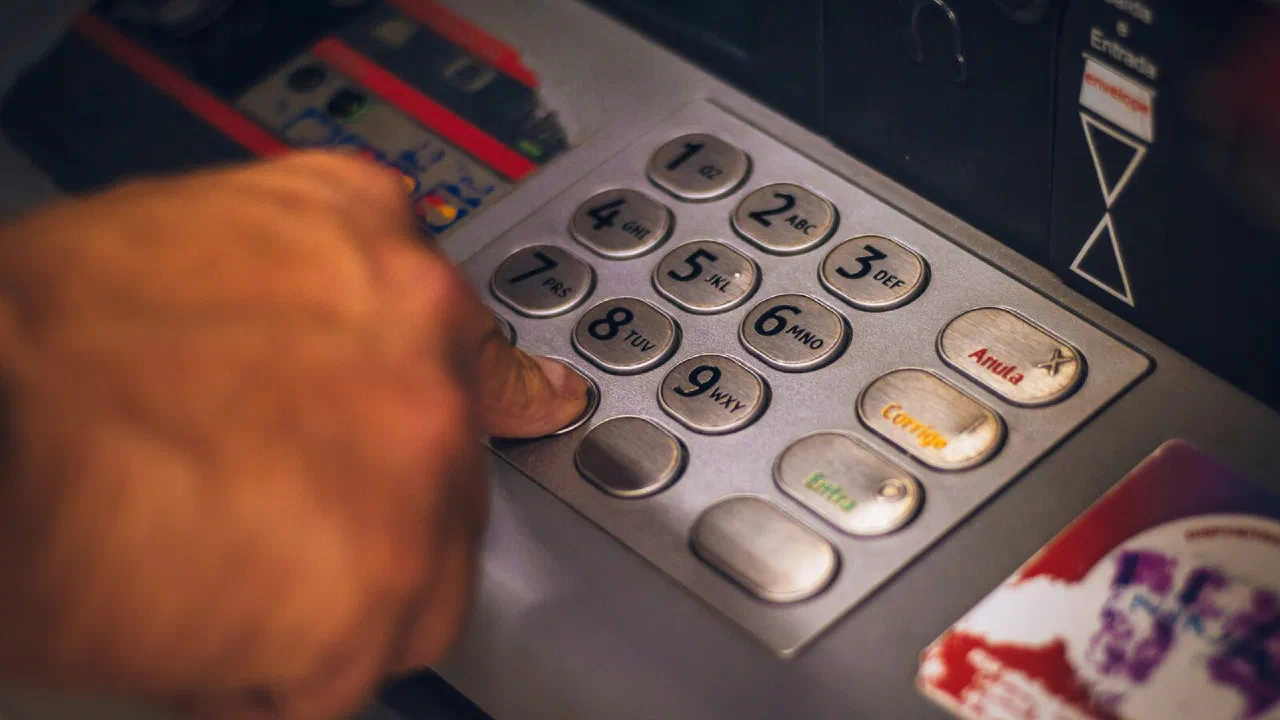
ATM withdrawal on a home-country card. The bridge. Available on day one, needs no Mexican anything, and the most expensive per peso at small amounts. Essential before you have an account, which is most of your first month.
Spending directly on a home card. Not really a way of getting money in — it is a way of not needing to. Good for anything a card is accepted for, useless for rent and for most counters.
Rent, a deposit, a póliza jurídica, a utility payment and a government fee are the items that force you into the first two routes. Groceries and restaurants do not.
SPEI is domestic, and that confusion costs people a week
Clear this up before anything else, because it is the single most common misunderstanding in this topic.
SPEI — Sistema de Pagos Electrónicos Interbancarios — is Banco de México’s domestic interbank transfer system. It moves pesos between Mexican accounts, typically within minutes, using the recipient’s CLABE, an 18-digit account identifier. It is excellent, it is how ordinary payments work here, and it is how you will pay your landlord, your insurer and most services.
What SPEI is not: a way to send money from abroad. You cannot SPEI dollars from a US bank. An international transfer reaches Mexico by other means and then, once the pesos are in a Mexican account, SPEI is what moves them around domestically.
So the sequence is: international route into your Mexican account, then SPEI out of it. Which is why opening an account is upstream of this whole post, and why the CLABE is the string to collect before you leave the branch.
One practical note: a specialist transfer service that advertises paying out “by local transfer” in Mexico is paying out over SPEI at the Mexican end. That is the mechanism, and it is why those payouts land quickly once the funds have crossed.
The wire: what it costs, and what holds it up
An international wire has up to four costs, and only the first is usually quoted to you:
- The sending bank’s outbound fee.
- Intermediary or correspondent bank charges, deducted in transit. These are the ones that make the landed amount lower than the arithmetic predicted.
- The receiving bank’s inbound fee, if it charges one.
- The conversion margin, applied by whoever converts — and who converts matters. If the dollars arrive and your Mexican bank converts them, the rate is your Mexican bank’s. If they are converted before sending, it is the sender’s.
Things that hold a wire up, in rough order of frequency: a name on the transfer that does not exactly match the account name; a missing or mistyped CLABE; a first transfer from a new counterparty triggering a compliance review; and a large amount into a young account with no history. None of these is unusual and all of them are resolved by a phone call and patience.
Two habits that remove most of the pain. Send a small first transfer to prove the path before you send the month’s rent through it. And keep the name identical across your home account, your Mexican account and your passport — the same mismatch problem that breaks bank openings breaks wires.
The ATM ceiling, and why small withdrawals are the expensive way
Three limits stack, and people only notice the first:
The machine’s per-transaction limit. Set by the ATM’s operator. Often lower than you expect and not negotiable.
Your home bank’s daily limit. Set by your card issuer, usually adjustable by asking, and worth adjusting before you fly rather than from here.
Your home bank’s own fees. A per-withdrawal foreign ATM fee plus, often, a percentage foreign-transaction fee. Some accounts waive one or both; find out which yours does before you rely on the route.
On top of those, the Mexican ATM operator will usually disclose its own surcharge on screen and ask you to accept it. And every ATM here will offer to convert the withdrawal to your home currency. Decline it. Always take pesos. Dynamic currency conversion at an ATM is the most expensive rate you will be offered anywhere in this post, and refusing it is free.
The arithmetic: if each withdrawal costs a fixed amount regardless of size, then withdrawing your monthly cash needs in one or two goes rather than eight is a straight multiple saving. The constraint is the per-transaction limit and your own comfort carrying cash. Withdraw at an ATM inside a bank branch during opening hours, which also means that if the machine retains your card there is somebody to ask.
Avoid standalone machines in tourist-facing locations. Their surcharges are higher and their conversion prompts are more aggressive.
Spending on a home card, and when to stop
Useful, and a trap if it becomes the default. A home card with no foreign-transaction fee is a reasonable way to pay for anything card-accepted, and it keeps those costs in your home currency without a conversion decision.
Where it stops working: rent, deposits, most government counters, the tianguis and the market, and anything where the merchant prefers a transfer. Those need pesos in a Mexican account, which is the whole reason the account exists.
And at every terminal, the same rule as the ATM: if the machine asks whether to charge in your home currency, say no. the peso question explains why that prompt exists and what it costs.
How to price any two routes with one calculation
Stop comparing advertised rates and fee schedules. Do this instead, once per route:
- Send a known amount through the route.
- Record the pesos that actually landed in the Mexican account.
- Divide landed pesos by sent dollars. That is your effective rate.
- Compare that against Banco de México’s published reference rate for the same day.
The gap is the all-in cost of the route, fees and margin together, expressed as a percentage. It is the only number that is comparable across a bank wire, a transfer service and an ATM withdrawal, because it absorbs every component including the ones nobody disclosed.
Run it at two sizes — a small amount and a realistic monthly amount. Routes that win at one size frequently lose at the other, which is exactly what you would expect given fixed fees, and it is the finding that tells you how to batch.
The first month, before you have an account
You will not have a Mexican account for the first few weeks, because the account needs the residency card and the card needs the canje. So plan the bridge deliberately:
- Raise your home bank’s daily ATM limit before you fly. From abroad it is a phone call; from here it is a phone call at a bad hour with worse hold music.
- Bring two cards from two different institutions, kept in two different places. A single retained or blocked card with no backup is the actual emergency in this topic.
- Tell both issuers you are moving, not travelling, so a legitimate pattern of Mexican withdrawals does not look like fraud in week two.
- Expect to pay the first month’s rent and deposit the expensive way, and put that cost in the setup bucket rather than in your monthly budget — what month one costs is where it belongs.
Two things worth knowing once
Deposit protection exists and has a limit. Bank deposits in Mexico are covered by IPAB, the deposit insurance institute, up to a cap per person per institution. The cap is expressed in UDIs — an inflation-indexed unit — rather than in pesos, so its peso value changes. Read the current figure from IPAB directly if you intend to hold a material balance here, and split across institutions if you are near it.
Large cash deposits attract attention, legitimately. Cash deposits into Mexican accounts are subject to reporting and, for foreign-currency cash, to limits. If your plan involves carrying cash and depositing it, ask the bank what applies to your account type before you do it rather than after. There is nothing wrong with the question.
What none of this needs is a facilitator. It needs an account, a CLABE, one proven route and the discipline to batch.