Ask to see an actual electricity bill from the summer months before you sign anything in Mérida, Mexico. Not an estimate from the landlord, not an average — the bill, for May, June or July, for this property. A landlord who has it will show you. A landlord who will not is telling you something, and what they are telling you is usually worth more than a month off the rent.
This is the clause that decides what your year costs. Air conditioning can reach around 40% of a household’s consumption in the warm season — the Diario de Yucatán reported that figure in April 2026 — and Mexican domestic electricity is not billed at a flat rate. It steps up with how much you use, and above a threshold it stops being subsidised at all. Which means the difference between two apparently similar houses is not a few hundred pesos a month. It can be the largest single line in your budget after the rent itself.
What to establish about the units themselves
Six questions, at the viewing, before anything about price.
- Which rooms have air conditioning? Bedrooms only is common and is usually enough for sleeping and not enough for living. A west-facing living room with no unit is a room you will not use from May to September.
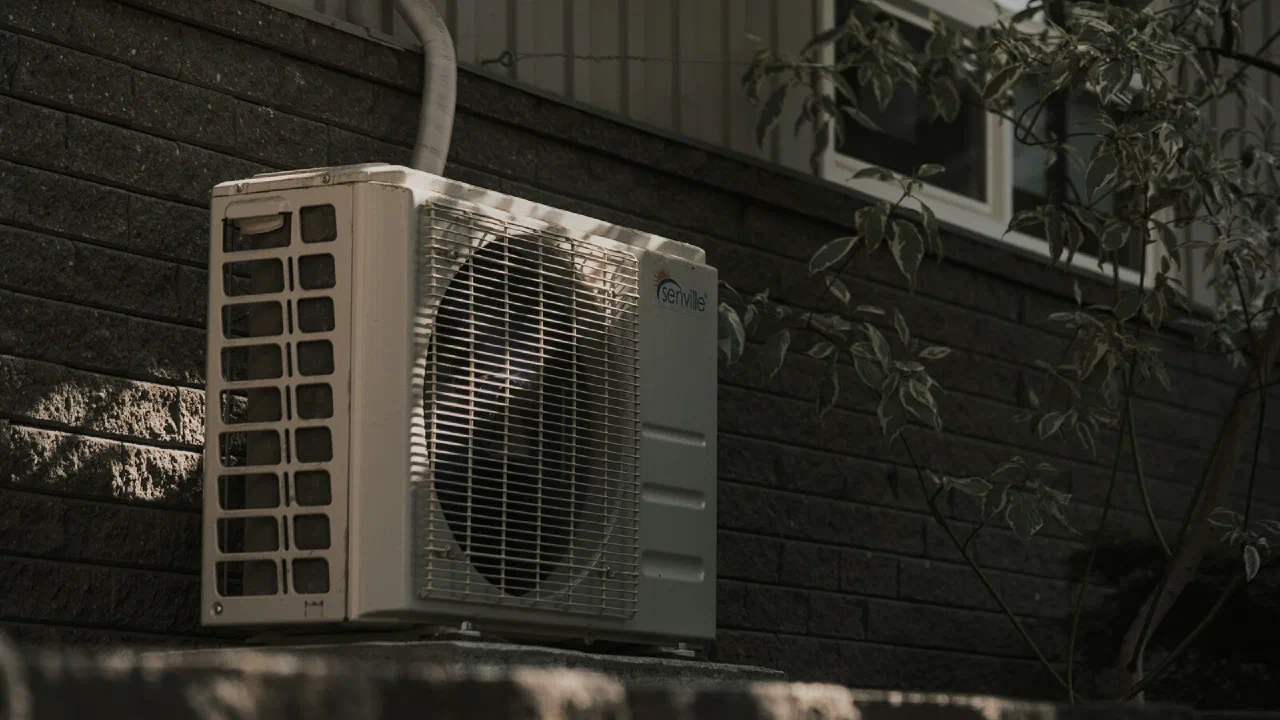
- What kind of units? Minisplit units are the norm and are far more efficient than window units. An inverter minisplit is more efficient again. Ask, and look at the label.
- How old are they, and when were they last serviced? An unserviced unit runs longer to reach the same temperature, which is money every night. Ask for the service record and ask who has been servicing them.
- Are they included in the lease, or the landlord’s, or yours to install? If the place has none, whether you may install and who owns the units at the end of the term is a clause, not an assumption.
- Will the supply carry them? An older house wired decades ago may not run three minisplits at once. If in doubt, ask whether the installation has been upgraded.
- What else keeps the heat out? Ceiling fans in every room, curtains or shutters on the west side, roof insulation, cross-ventilation, ceiling height, and whether there is anything above the roof. These decide how much the air conditioning has to work, and they are free to assess by standing in the room.
Colonial houses in Centro with high ceilings and thick walls behave differently from a modern house in the north with large windows. Neither is automatically cheaper to cool; the specific building is what matters, and the summer bill is the only honest evidence.
How Mexican domestic electricity actually bills
Enough of the mechanism to make you ask the right questions.
CFE assigns each locality a domestic tariff according to its summer temperatures, running from tariff 1 in temperate places through progressively hotter bands. Mérida sits in one of the hotter bands — tariff 1D — which carries a larger subsidised allowance during the defined summer months than a cooler locality gets. The tariff name is printed on the bill. Read it off the actual bill rather than trusting a listing.
Within a tariff, consumption is banded. The first block of kilowatt-hours is cheap, the next costs more, the one above that more again. So a household that uses twice as much does not pay twice as much. It pays more than twice.
Above a threshold, the subsidy is withdrawn entirely. A household whose consumption over a rolling twelve-month period exceeds the limit set for its tariff is reclassified as DAC — Doméstica de Alto Consumo — and billed at unsubsidised rates. This is the cliff, and two things about it are what catch people:
- It is an average over twelve months, not a single month. One hot summer in a badly insulated house does not just cost you that summer; it can move you into DAC for a long stretch afterwards.
- Getting out again takes time, because the same rolling average has to come back down.
The current kilowatt-hour limits, the summer period dates and the rates are all published by CFE and change; read them from CFE’s own tariff pages and from the bill in your hand rather than from anyone’s summary, including this one. The fuller version of the mechanism is the twelve-month average that triples your electricity, and what an ordinary summer bill looks like is the CFE summer bill.
The clause, and its four possible shapes
How the lease handles electricity is one of the four clauses that decide what a Mérida lease actually costs — the others are in the guarantee, the increase and the deposit.
| Shape | What it says | What to watch |
|---|---|---|
| Contract in your name | You transfer the CFE account and pay CFE directly | The clean one. Check for arrears before transferring |
| Contract in the landlord’s name, you reimburse | You pay the landlord what the bill says | Ask for the bill itself every time, not a figure |
| Included up to a ceiling | Rent covers electricity to a stated amount, you pay above it | Establish the ceiling in kilowatt-hours or pesos, in writing |
| Fully included | Rent covers all electricity | Rare on a long lease, and priced in. Expect a rent that assumes heavy use |
The one to avoid is a vague inclusion — “electricity included, within reason”. That clause is a dispute waiting for August. If a landlord offers an inclusion, get the ceiling written as a number and get it clear what happens the month you exceed it.
If the contract stays in the landlord’s name, two conditions are reasonable to ask for and easy to grant: that you see each bill in full, and that the property’s DAC status is disclosed now. If the house is already on DAC when you move in, you are inheriting somebody else’s twelve-month average.
What to ask the landlord, in these words
- ¿Me puede mostrar un recibo de CFE de mayo o junio de este año? — May I see a CFE bill from May or June of this year?
- ¿La casa está en DAC? — Is the house on DAC?
- ¿A nombre de quién queda el contrato de luz? — Whose name is the electricity contract in?
- ¿Cuándo se les dio servicio a los minisplits? — When were the minisplits last serviced?
Ask all four before you talk about rent. They are ordinary questions, they mark you as someone who knows what they are looking at, and the answers change what the place is worth.
What to do once you have the bill in front of you
Read three fields: the tariff (is it 1D, or DAC), the kilowatt-hours for the period, and the amount. Then compare the summer period against a winter one, because the ratio between them tells you how hard this specific building has to work. A house whose July is several times its January is a house that is expensive to live in whatever the rent says.
If the property is on DAC, that is not automatically a refusal — but it is a negotiation. You are being asked to take on a bill that is already elevated for reasons that predate you, and the rent should reflect it, or the landlord should carry the electricity until the average comes back down.
The rest of the summer question
Air conditioning is the cost. The rest of living through the hot months here — what changes about the day, what a house needs beyond its units, and what the season does to everything else — sits in the living-it posts, starting with the third month, when the bill arrives. Water is its own account and its own bill: JAPAY and what comes out of the tap.
And the transfer of the services themselves, on handover day, is CFE, JAPAY and the gas tank — do it in the first week, with the meter reading photographed, or you will be arguing about someone else’s consumption.
Checked on
Checked on 4 September 2026. The 40% figure for air conditioning’s share of warm-season household consumption is the Diario de Yucatán’s reporting from April 2026. The tariff structure, the banded blocks and the DAC mechanism are as CFE publishes them; the current kilowatt-hour limits, the summer period dates and the rates are not quoted here on purpose — they change, and the authoritative copy is CFE’s own tariff publication and the bill for your own property. Nothing here is advice about any specific installation; an electrician looking at the supply before you sign is a reasonable spend on an older house.